Happy New Year!
As 2026 begins, we’re taking a look at what’s shaping Singapore’s job market and workforce trends for the year ahead.
This January, we cover steady pay rises planned by firms, insights from the latest labour market and remote work trends, and key updates on CPF contributions and healthcare sums.
Whether you’re planning workforce strategies, reviewing compensation, or keeping an eye on talent trends, here’s a snapshot of what employers need to know as we start the year.

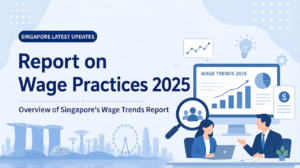
Singapore Pay Rise Outlook for 2026
Singapore firms are expected to keep salary increments moderate in 2026, with average pay rises of about 3% to 6% for employees who stay with their current employers. This outlook is based on recent salary surveys by HR and recruitment firms, reflecting continued economic caution among employers amid uncertainty.
While general pay increases remain steady compared with 2025, some employers are planning smaller bonuses or keeping bonus payouts at modest levels rather than the larger awards seen in more buoyant years.
Specialized sectors continue to show stronger demand: areas such as life sciences, medical devices, AI, cybersecurity, and ESG compliance roles are expected to see more competitive salary growth due to talent shortages in those fields.
In contrast, broader labour market conditions remain cautious, with employers balancing cost management with the need to retain skilled professionals.
What it means for your company:
- Plan Salary Increases Strategically
Most companies will stay within 3–6% base pay increases in 2026. Benchmark your pay scales to remain competitive while managing budgets. - Expect More Moderate Bonuses
Total year-end payouts may be smaller or more predictable. Consider non-monetary perks (training, flexible work, wellness programs) to boost employee satisfaction. - Recognize Skill-Specific Demands
High-demand roles (tech, life sciences, cybersecurity, ESG) may require premium compensation to attract and retain talent. - Focus on Retention
Even with modest pay rises, clear communication, performance-linked rewards, and career growth opportunities can help retain top performers.
Click here to view the full article

October 2025 SG Labour Market Update
Hiring Trends:
In October 2025, Singapore saw a continued decline in job postings, with ads falling 3.1% month‑on‑month and being 17.9% lower than a year ago.
This marked the eighth consecutive monthly decline in job posts despite broader labour demand remaining elevated.
Even with the fall, job postings were still 32% above pre‑pandemic levels, reflecting the lingering strength of Singapore’s tight labour market.

※Click on the image to view it in full size
Sector Demand:
Most sectors (about 86%) still have more job postings than before COVID‑19, though the number both above baseline and those with more than double pre‑pandemic postings have edged down. Demand remained especially high in pharmacy, sport, hospitality & tourism, veterinary roles, education & training, and physicians & surgeons. Conversely, sectors like driving, childcare, arts & entertainment, and beauty & wellness had job postings below pre‑pandemic levels.

※Click on the image to view it in full size
Three-Month Trend:
Looking at the three‑month change up to October, some occupational categories saw recent growth, notably retail, hospitality & tourism, and healthcare roles such as physicians & surgeons and therapy. At the same time, roles in childcare, driving, sports, community service, installation & maintenance, and insurance experienced significant declines in postings.

※Click on the image to view it in full size
Remote Work:
About 8.2% of job postings in October included remote or work‑from‑home terms, up from 7.7% a year earlier. Remote work mentions were most common in IT infrastructure, operations & support, followed by insurance and sales. The share of remote‑friendly postings rose most in marketing, medical information, and legal roles, while it declined in architecture, beauty & wellness, and hospitality & tourism.

※Click on the image to view it in full size
The report concludes that while job postings continue to trend downward with no clear signs of stabilising, Singapore’s labour market remains tight, with consistently low unemployment and ongoing skill shortages, meaning employers still need talent even as hiring moderates.
What this means for your company:
- Hiring is steady, but the market is cooling, plan ahead.
- Certain sectors like healthcare, retail, and tourism remain in demand, keep an eye on opportunities.
- Offering flexible or remote options can help attract talent.
- Supporting staff with development and internal growth can strengthen your workforce.
Click here for the full report.


Click here for the full report.

CPF Basic Healthcare Sum Increase
From 1 January 2026, Singapore’s Central Provident Fund (CPF) will raise the Basic Healthcare Sum (BHS) for members under 65 from $75,500 to $79,000.
The BHS is the cap on the amount that can be held in a CPF MediSave Account to cover basic subsidised healthcare needs in older age, and it is adjusted annually to reflect rising healthcare costs.
Members aged 66 and above in 2026 will not be affected, as their BHS remains fixed at their current level.
What this means for your company:
- Stay informed on CPF changes: The BHS increase affects employees under 65, which may impact retirement and healthcare planning.
- Update payroll/HR policies: Ensure your HR and benefits teams are aware of the new BHS limits for any MediSave-related processes.
- Employee communication: Consider informing staff about the BHS update so they understand how it affects their CPF and healthcare planning.
- Benefits planning: Companies offering top-up schemes or healthcare support should review their contributions in light of the new limits.
Click here to view the full article.
Get in touch
For Customised Training Program
Recruitment Agency Singapore
Recruitment Agency Singapore
Disclaimer: Please use the information provided in this newsletter at your own discretion and risk. We are not responsible for any losses incurred by users in relation to the information provided in this newsletter and we seek your understanding.