
Key highlights from the Labour Market Report for the second quarter of 2023
We explore noteworthy subjects such as supporting working caregivers in Singapore’s aging population. Furthermore, we delve into the emerging trend of companies in Singapore actively embracing inclusivity by increasing the employment of disabled individuals.
–
Key Highlights of Labour Market Report 2Q 2023
Employment Growth
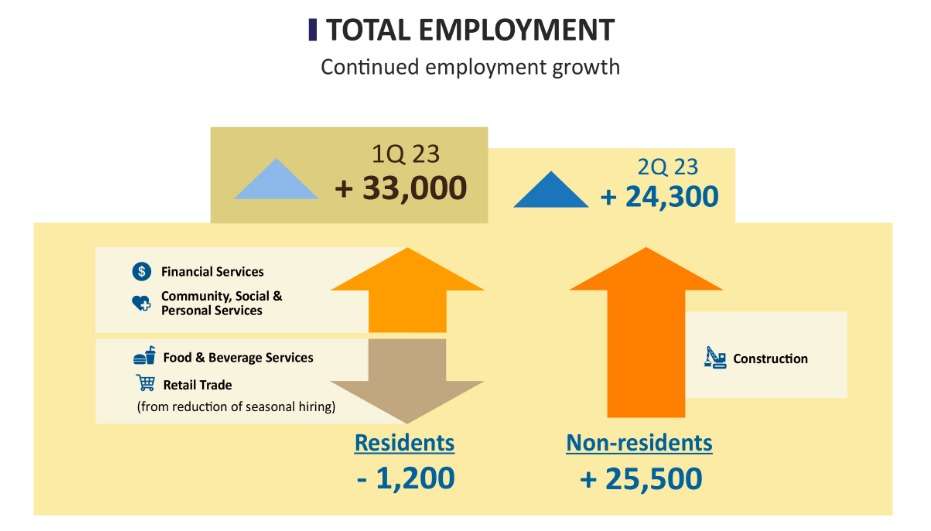
Total employment growth slowed to 24,300 in 2Q 2023, down from 33,000 in the previous quarter. Non-residents accounted for the increase (25,500), while resident employment saw a slight contraction (-1,200), primarily due to seasonal effects in specific sectors.
Unemployment Rates
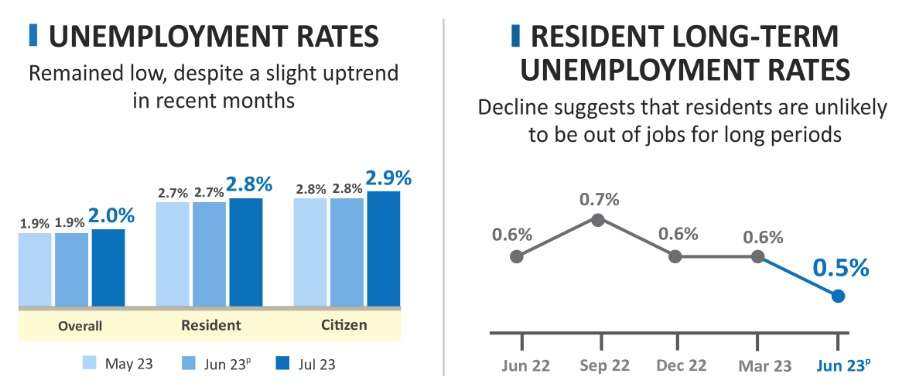
Unemployment rates remained low in June 2023, with overall at 1.9%, resident at 2.7%, and citizen at 2.8%. The long-term unemployment rate for residents was 0.5%.
With a weaker economic growth projection, there’s a possibility that unemployment may inch up modestly in the coming months.
Cooling Demand
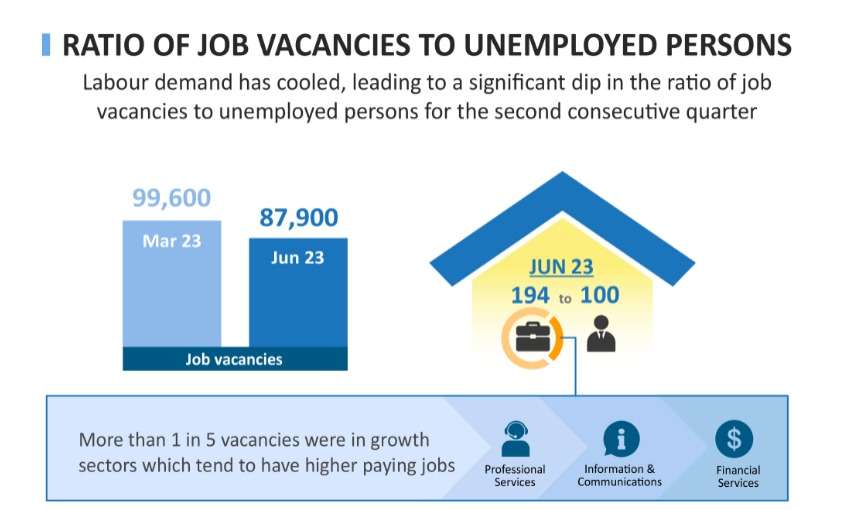
Labor demand showed signs of cooling as the number of job vacancies declined for the fifth consecutive quarter, reaching 87,900 in June 2023, down from a peak of 126,000. The ratio of job vacancies to unemployed persons also decreased.
Outlook
While the contraction in resident employment is expected to be temporary and largely seasonal, there is anticipation of resident employment growth in 3Q and 4Q, driven by the recovery in tourism, including events like the F1 and year-end festivities. However, the growth rate is expected to be lower compared to previous years due to cooling labor demand and slower resident labor force growth.
Source: mrsd-Labour-Market-Report-2Q-2023.pdf (mom.gov.sg)
Supporting Working Caregivers in Singapore’s Aging Population
As Singapore’s population ages, it’s time to adapt and support caregivers. By 2030, one in four Singaporeans will be 65 or older. As the caregiving responsibilities rise, it’s crucial to provide the support our working caregivers deserve. Currently, many caregivers are forced to take unpaid leave, which can lead to feelings of isolation.
🔍 Key recommendations from National Trades Union Congress (NTUC):
1. Make paid caregiving leave mandatory.
2. Provide more flexible work arrangements.
3. Redesign jobs and allow remote work opportunities.
Survey findings from NTUC:
👉 85% of respondents believe flexible work arrangements can help manage work and caregiving responsibilities.
👉 64% value paid leave for caregiving.
👉 57.5% appreciate financial support like medical insurance or subsidies.
Source: Flexible work can ease pressure on working caregivers in Singapore (HRM Asia)
j
Embracing Inclusivity: More Firms Leveraging Wage Credits to Employ Disabled Individuals
New initiatives like the Enabling Employment Credit have aided over 10,000 disabled individuals in finding employment. In 2022 alone, 6,600 organizations benefited from wage credits, with 2,000 hiring disabled individuals who hadn’t worked for at least six months.
The program, running till 2025, offers up to 20% wage support for disabled employees earning under SGD $4,000. For those employed less than six months, there’s an additional 20% wage offset for the first nine months, fostering more opportunities.
Programs like the Open Door Programme and Enabling Academy are making significant impacts, with 380 opportunities filled since 2021. The resident employment rate for disabled individuals aged 15 to 64 has risen from 28.2% in 2018-2019 to 31.4% in 2021-2022, moving closer to the goal of hiring 40% of the disabled community by 2030.
Source: More firms in Singapore utilise wage credits to employ disabled employees (hrmasia.com)
Disclaimer: Please use the information provided in this newsletter at your own discretion and risk. We are not responsible for any losses incurred by users in relation to the information provided in this newsletter and we seek your understanding.